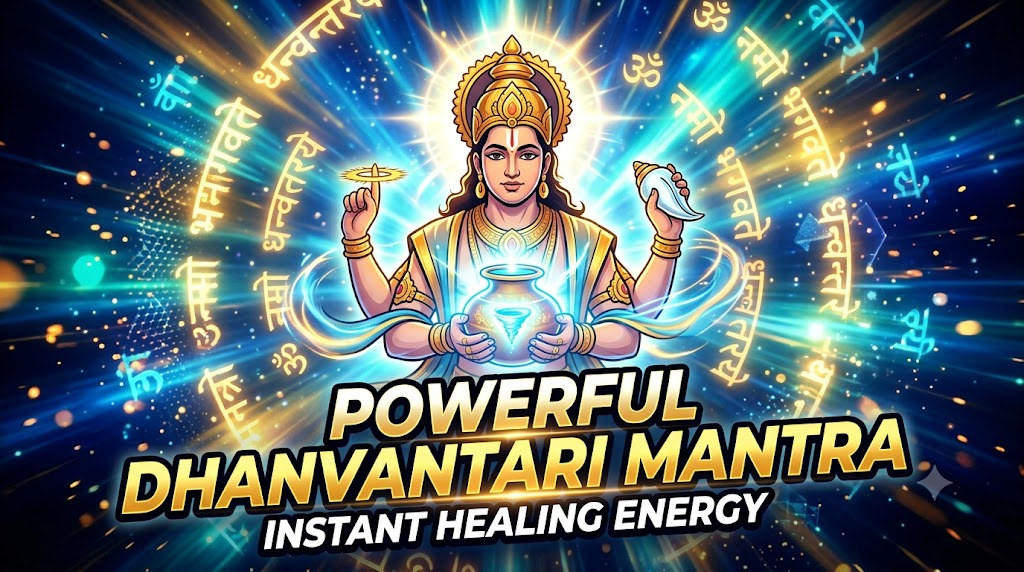
ॐ नमो भगवते वासुदेवाय धन्वंतरये
अमृतकलश हस्ताय सर्वामयविनाशनाय
त्रिलोक्यनाथाय श्री महाविष्णवे नमः ॥
Om Namo Bhagavate Vasudevaaya Dhanvantaraye
Amrutha-Kalasa-Hasthaaya Sarvaamaya-Vinaashanaaya
Tri-Lokya-Naathaaya Shri Mahaavishnave Namaha ||
Dhanvantari Moola Mantra English Translation:
“I bow reverently to the Supreme Divine Lord Vasudeva Dhanvantari, who holds the vessel of divine nectar in His hands. Salutations to the destroyer of all diseases and physical distress, the Master of the three realms, who is non-different from Supreme Lord Vishnu.”

Does Listening Alone Help, or Must You Chant?
Yes, simply listening to this mantra is genuinely beneficial.
In Vedic tradition, sound is considered a cosmic energy form (Shabda Brahma). The power of a mantra relies not only on vocal output, but on the frequency, rhythm, and intention carried by the sound waves.
       [ Mindful Listening ]                      [ Active Chanting ]
  • Calms Nervous System                  • Engages Breath Control
  • Ideal for Illness / Bed Rest             • Stimulates Palate Reflexes
  • Sanctifies Surrounding Space       • Maximizes Focus & Energy
1. How Listening Helps
- Neurological Calming: Listening to structured Sanskrit chanting reduces cortisol (stress hormone) levels and triggers alpha brain waves, inducing a state of parasympathetic relaxation conducive to healing.
- Healing for the Bedridden: Patients, young children, or those suffering from intense fatigue may not have the physical stamina to chant. Listening allows them to absorb the restorative vibrations effortlessly (Sravana).
- Atmospheric Purification: Playing this mantra on speakers in a home, hospital room, or treatment space fills the environment with positive, peaceful energy.
2. Listening vs. Chanting: Key Differences
| Aspect | Listening (Sravana) | Active Chanting (Kirtana / Japa) |
| Effort Required | Passive & receptive | Active & intentional |
| Physical Impact | Relaxes muscles and heart rate | Activates vocal chords, diaphragm, and palate acupressure points |
| Best Used For | Rest, recovery, bedtime, background sanctification | Morning practice, deep meditation, building inner energy |
| Mental Benefit | Soothes anxiety and mental restlessness | Builds intense concentration and willpower |
Recommendation: If you are healthy and able, chanting is ideal because vocal resonance enhances the physical benefits. If you are unwell, tired, busy, or recovering, listening attentively is completely valid and effective.
Puranic History & Origins
1. Emergence from Samudra Manthan
The story of Lord Dhanvantari originates in the Srimad Bhagavatam and Vishnu Purana during the Samudra Manthan (the cosmic churning of the Ocean of Milk by Devas and Asuras).
As the ocean yielded various celestial treasures, Lord Dhanvantari manifested as the 12th incarnation (avatar) of Lord Vishnu. He appeared as a majestic figure holding four divine attributes:
- Amrita Kalasha: The golden pot containing the nectar of immortality.
- Sankha & Chakra: The conch and discus of Lord Vishnu for spiritual protection.
- Jalauka (Leech) & Medicinal Herbs: Early symbols of therapeutic medicine and natural healing.
2. The Father of Ayurveda
To bring the divine science of healing to humanity, Lord Dhanvantari reincarnated on Earth as King Divodasa of Kashi. He organized medicinal knowledge into eight distinct branches (Ashtanga Ayurveda) and taught legendary disciples, including Sage Sushruta—author of the Sushruta Samhita (one of the world’s foundational surgical texts).
Core Health & Mental Benefits
- Relief from Ailments (Sarva-amaya Vinaashana): Traditionally chanted to accelerate recovery from chronic conditions, post-surgery healing, and seasonal ailments.
- Strengthens Immunity & Ojas: The rhythmic vibration promotes physical vitality, metabolic balance, and inner life force (Ojas).
- Alleviates Health Phobia: Addresses both physical illness (Vyadhi) and psychological distress (Adhi), calming fear and illness-related anxiety.
- Enhances Medicine Efficacy: Traditional Ayurvedic doctors (Vaidyas) historically recite this mantra over medicine before administering it to empower its curative potential.
When & How to Recite
Optimal Timing
- Time: Morning during Brahma Muhurta (4:00 AM – 6:00 AM) or evening sunset.
- Key Days: Thursdays (dedicated to Lord Vishnu), Saturdays (for relief from chronic physical hardship), and Dhanvantari Jayanti / Dhanteras.
- Count: 11, 21, or 108 times daily.
Simple Step-by-Step Daily Practice
1.1. Prepare Your Space:Environment & Posture.
Sit comfortably facing East or North in a clean, quiet area. Keep your spine straight.
2.2. Keep Water Nearby:Sanctifying Water.
Place a small glass or copper bowl of fresh drinking water in front of you while chanting or listening. Water absorbs sound vibrations readily.
3.3. Set Your Healing Intent:Intention (Sankalpa).
Close your eyes, take 3 deep breaths, and dedicate the session to physical health, immunity, and well-being for yourself or a loved one.
4.4. Chant or Listen:Recitation / Audio.
Chant the verse with devotion, or play a clean audio recording. Focus on the golden light of Lord Dhanvantari holding the pot of nectar.
5.5. Drink the Water:Consuming Prasad.
After finishing, bow respectfully and drink the energized water (Tirtham).
- Bharat Ka Bachcha Bachcha: How a High-Energy Child DJ Remix Is Reawakening Youth Pride and Faith
- 3D Animated Hanuman Chalisa DJ Remix 2026 | The Story Behind Our Cute Baby Singer Devotional Journey
- The Sacred Shield: Listening to & Chanting Sri Sudarshana Shatkam
- The Hanuman Beej Mantra A Highly Potent Spiritual Formula
- HANUMAN: The Divine Childhood – Bringing the Innocence of Lord Hanuman to Life Through Music and Cinema